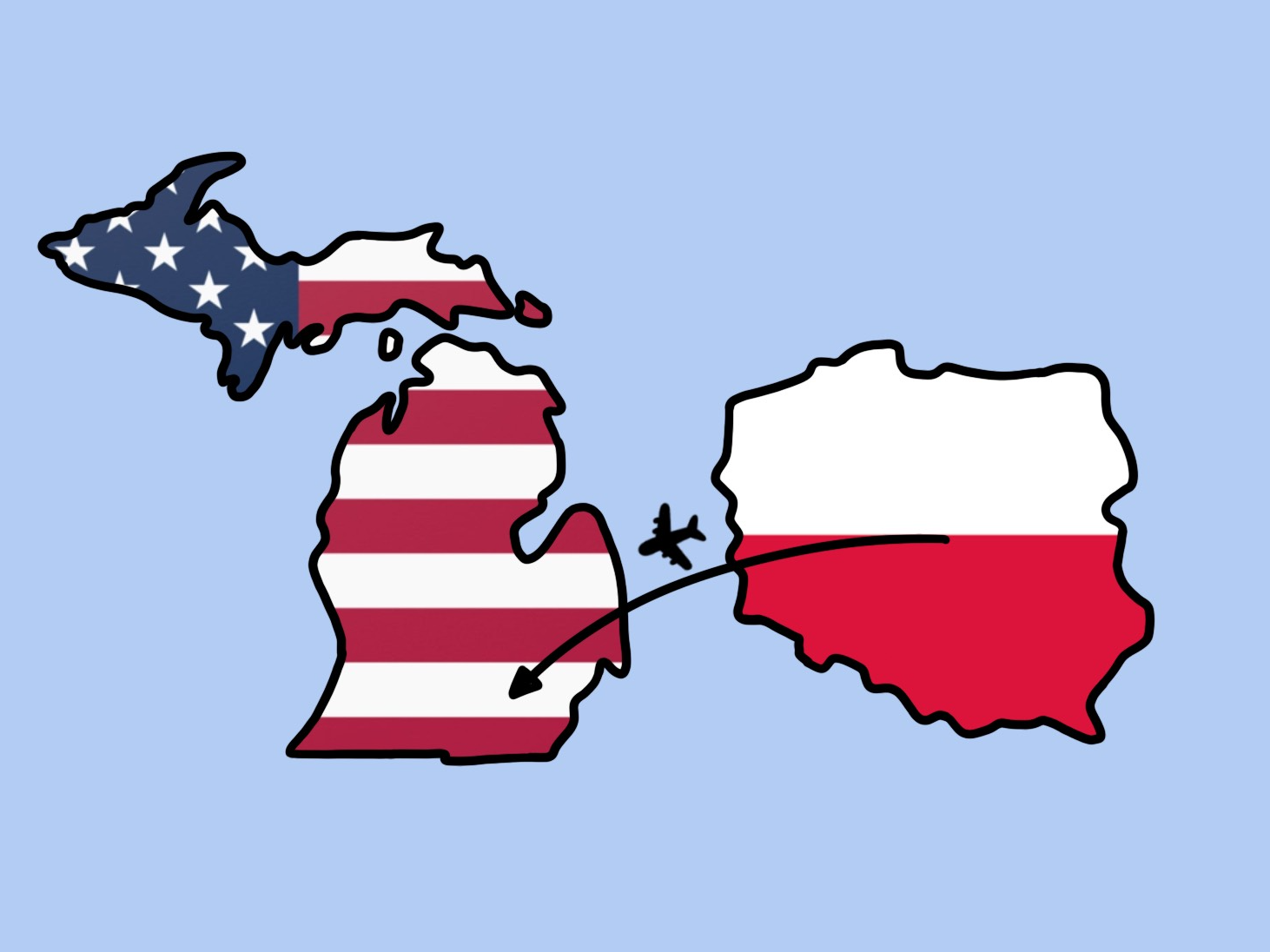
When you come to the U.S. as an exchange student, you think you know what to expect. You’ve seen the movies, heard the songs. But then reality hits and it’s all different from what you imagined. Not in a bad way, just not what you thought it would be. Some things surprised me, some made me laugh, and others took a while to get used to.
Here are ten things that shocked me about life in the US.
- Cars
Everything here revolves around cars. Back home in Poland, you could walk, take a bus, or tram anywhere, but here somehow even a shop that’s “super close” turns out to be a 20-minute car drive away. There are huge parking lots everywhere, drive-throughs for everything and sidewalks seem to be there just for decoration. For me, it’s crazy to think that you can’t survive without a car. Also, in Europe we get our driving license when we’re 18, so I still can’t get used to the fact that people my age drive.
- Sports
The sports culture is huge here in the United States . Every Friday everyone goes to high school football games, on Saturdays they watch university football teams play, and on Sundays, professionals. Not only do we not have football in Poland, but sports aren’t that important to us. Everyone has obligatory PE in school but not many people actually play sports outside of that. And if they do, it’s in an independent league, not at school.
- Everything is Bigger
Things in the United States tend to be larger than in other countries – houses, schools, malls, cars, seats, roads, food portions – everything is bigger. A “small” sized drink would probably be considered large in Europe. For example, a small drink at a U.S. McDonald’s is around 16 fluid ounces, while a large in the UK is 17 fluid ounces. It’s easy to notice in everyday life and it shows how having more space changes the way everything is built and served.
- Food
The food here is definitely a lot different and it’s probably one of the hardest things to get used to for me. Everything is more processed, sugary, or oily. Even when you look at the American fanta and the European fanta, you can see the color is completely different due to the dyes added in America. I also really miss authentic bread and buns as well as traditional Polish food. But there are also things I like about the food in America, such as the strong Mexican influence in many dishes, convenient and easy-to-prepare foods, or the fact that restaurants usually give you free water, which isn’t the case in Europe.
- Tipping
In Europe, servers usually earn a living wage, so tipping is optional, only for really outstanding service. Here, waitstaff often rely on tips for most of their income, so you’re expected to tip around 15-20% of your bill. And what comes with that is that the waitstaff is usually quick to bring you your check and wants you out of there as quickly as possible, because a faster turnover means more money for them. Back home you could stay at a restaurant for hours without feeling rushed.
- Sales Tax
In the US, sales tax isn’t included in the listed price, leaving you to calculate the total cost in your head before paying, which can be really annoying. European Union law requires that the price displayed to consumers must include all taxes, so the price you see is the price you pay.
- Sense of community
One of the things I’ve noticed and appreciated the most is how connected people are. People look out for each other, through things like volunteering, helping neighbors or participating in community activities. Even tiny things like small talk make a difference. It’s normal for strangers to greet you with a “Hi, how are you?” or for someone to compliment your hair or outfit. If you did that in my country people would probably stare at you like you’re weird. Coming from Poland where people are usually more distant, this closeness has been really comforting and has become one of my favorite things about living here.
- Eating times
In Poland, we usually eat breakfast between 7 and 8 am; lunch, the main meal of the day, is between 2 or 3 pm and it often has two courses with soup and a main dish; and dinner, a lighter meal, is eaten between 7 to 9 pm. In the United States, breakfast is at about the same time, lunch is around noon but it’s a small meal, and dinner, the biggest meal of the day, is between 5 and 8 pm. It’s definitely something I had to adjust to, and at the beginning of my exchange, I was hungry all day because I didn’t have that central, filling meal in the afternoon, like I was used to.
- School
Overall, the biggest culture shock I’ve experienced has been the school. School, in America, compared to my home , Poland, is extremely different. For example, one difference is that in America, you go to the school closest to where you live, while in Poland, students take exams at the end of eighth grade to get into the best school they can, similar to your university application process, so the school they end up going to can be really far away from their house. Both systems have their strengths and weaknesses, however there are enough differences that it really needs to be a whole other article.
- The tiny things.
Finally, there are many little shocks every day that remind me I’m in a different country:
- Different outlets and voltages, light switches, and even toilet seats and flushes (and don’t even get me started on the gaps under the doors in the restrooms!).
- The fact that you use dots to indicate a decimal and use commas to separate the zeros in large numbers, which is the opposite of how we do it in Europe.
- And the confusion in how you measure things: grams vs pounds, Fahrenheit vs Celsius, liquid ounces vs milliliters, inches vs centimeters, etc. It was really confusing, when someone would say it’s 70 degrees outside and I would be like “Wait, is that hot or cold?”.
These small differences are really annoying at first, but over time you get used to them and they become part of your new reality. Before you know it, the things that once felt strange start to feel normal, and you realize just how much you’ve adapted and grown as a person.